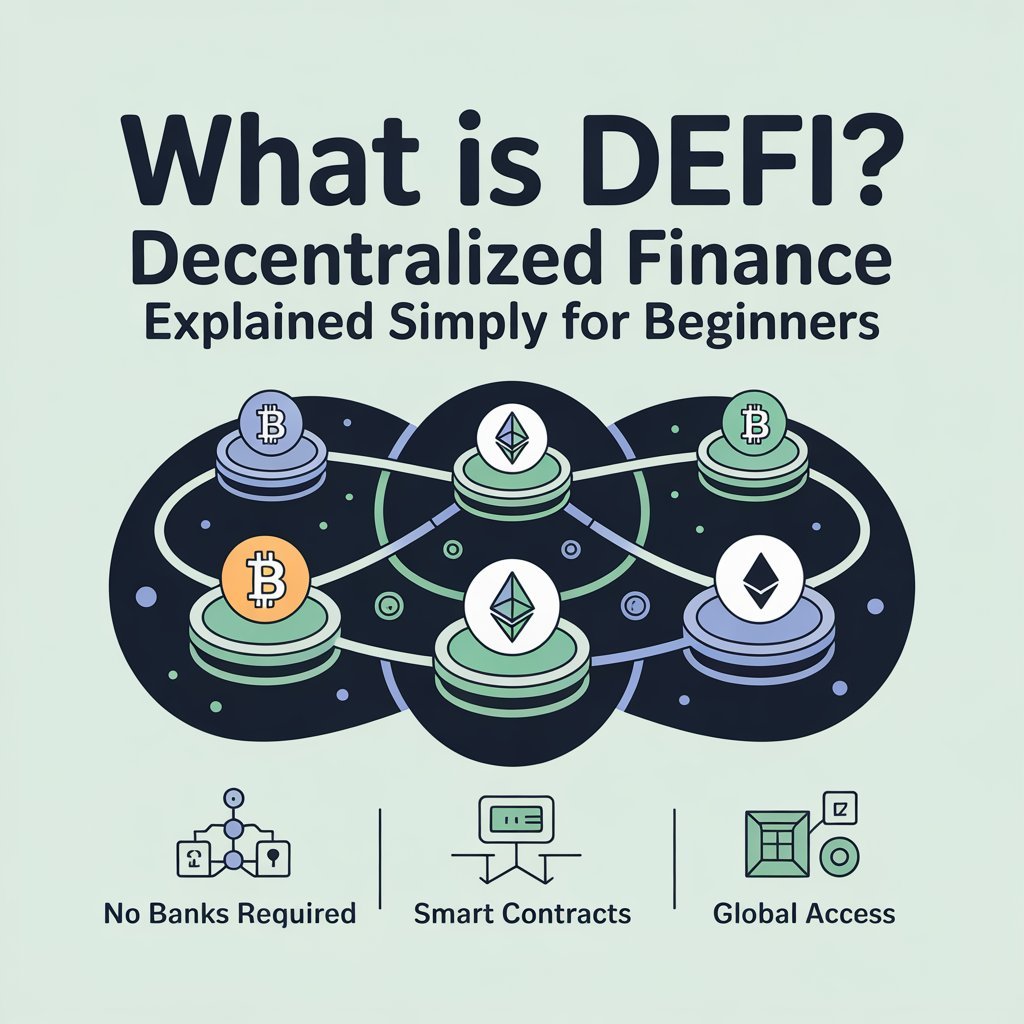

The world of finance is changing rapidly, and one term you may hear often is DeFi, short for Decentralized Finance. For beginners, DeFi can sound complicated or technical, but the core idea is actually very simple.
In this article, you’ll learn what DeFi is, how it works, why people use it, and whether it’s safe, explained in clear and simple language. This beginner-friendly guide is perfect if you’re new to crypto or just curious about modern finance.
What Does DeFi Mean?
DeFi (Decentralized Finance) is a system of financial services that works without banks, governments, or middlemen.
Instead of relying on traditional institutions, DeFi uses:
- Blockchain technology
- Smart contracts
- Decentralized apps (dApps)
In simple words, DeFi lets people manage money directly with each other using technology, not banks.
Traditional Finance vs DeFi (Simple Comparison)
Traditional Finance
- Banks control your money
- Approval is required
- Limited access
- Slower transactions
- Higher fees
Decentralized Finance (DeFi)
- You control your money
- No approval needed
- Open to anyone with internet
- Faster transactions
- Lower or no middleman fees
This is why many people see DeFi as the future of finance.
How Does DeFi Work? (In Simple Terms)
DeFi runs on blockchain networks, mainly Ethereum and similar platforms.
Key Components of DeFi:
1. Blockchain
A blockchain is a public digital ledger that records transactions securely and transparently.
2. Smart Contracts
Smart contracts are automated programs that execute rules automatically.
For example:
- If you send money → you receive interest
- If conditions are met → the transaction completes
No human involvement is required.
3. Digital Wallets
To use DeFi, users connect a crypto wallet instead of opening a bank account.
What Can You Do With DeFi?
DeFi offers many financial services similar to banks—but without the bank.
1. Save and Earn Interest
DeFi platforms allow users to deposit crypto and earn interest automatically.
Why People Like This:
- Higher interest than banks
- No paperwork
- Funds remain under user control
Interest is generated through smart contracts.
2. Borrow and Lend Money
In DeFi, people can:
- Lend crypto and earn interest
- Borrow crypto by providing collateral
No credit checks or bank approval is required.
3. Trade Cryptocurrencies
DeFi allows users to trade directly with others using decentralized exchanges (DEXs).
Benefits:
- No centralized authority
- Full control of funds
- Transparent pricing
Trades happen wallet-to-wallet.
4. Send Money Globally
DeFi enables fast and low-cost international payments.
Why It’s Useful:
- No banks involved
- No exchange delays
- Works 24/7
This is especially helpful for international users.
Why Is DeFi Popular?
DeFi has gained popularity because it gives users freedom and control.
Main Reasons People Use DeFi:
- Full ownership of funds
- Financial access without banks
- Transparency
- Innovation and automation
In Tier-1 countries, DeFi is often used as an alternative investment and financial tool.
Is DeFi Safe?
DeFi offers freedom—but also responsibility.
Potential Risks:
- Smart contract bugs
- Market volatility
- Scams and fake platforms
- No customer support like banks
How to Stay Safer:
- Use well-known platforms
- Never invest money you can’t afford to lose
- Learn basics before using advanced features
DeFi is not risk-free, but risks can be reduced with education.
Who Should Use DeFi?
DeFi is suitable for:
- Tech-curious beginners
- Crypto investors
- Bloggers and digital earners
- People seeking financial alternatives
It may not be ideal for those who prefer guaranteed returns or full regulation.
DeFi vs Crypto: Are They the Same?
Many people confuse DeFi with cryptocurrency, but they are different.
Cryptocurrency
- Digital money (like Bitcoin)
- Used for payments or holding value
DeFi
- Financial services built using crypto
- Includes lending, saving, trading
Crypto is the tool, DeFi is the system.
Do You Need a Lot of Money to Use DeFi?
No. Many DeFi platforms allow users to start with small amounts.
However:
- Transaction fees may apply
- Beginners should start small
Learning first is more important than investing big.
Common DeFi Mistakes Beginners Should Avoid
Avoid These Errors:
- Chasing high returns blindly
- Using unknown platforms
- Ignoring security basics
- Investing without research
DeFi rewards knowledge and patience, not shortcuts.
Future of DeFi (Beginner Perspective)
DeFi continues to grow as:
- Technology improves
- Regulations become clearer
- More users adopt blockchain
Many experts believe DeFi will coexist with traditional finance, not replace it completely.
FAQs – DeFi Explained Simply
Q1: Is DeFi legal?
In many countries, DeFi is legal but not fully regulated. Rules vary by location.
Q2: Can beginners use DeFi?
Yes, but beginners should start slowly and learn basics first.
Q3: Do I need a bank account for DeFi?
No. A digital wallet and internet connection are enough.
Q4: Can I lose money in DeFi?
Yes. Like any financial system, DeFi has risks.
Q5: Is DeFi better than banks?
DeFi offers more freedom, but banks provide stability and protection. Both have pros and cons.
Conclusion
Decentralized Finance (DeFi) is a new way of managing money without banks or middlemen. It allows people to save, borrow, lend, trade, and send money using blockchain technology.
For beginners, DeFi may seem complex at first—but at its core, it’s about financial freedom, transparency, and control. If you take time to learn and stay cautious, DeFi can become a powerful financial tool in the modern digital world.